
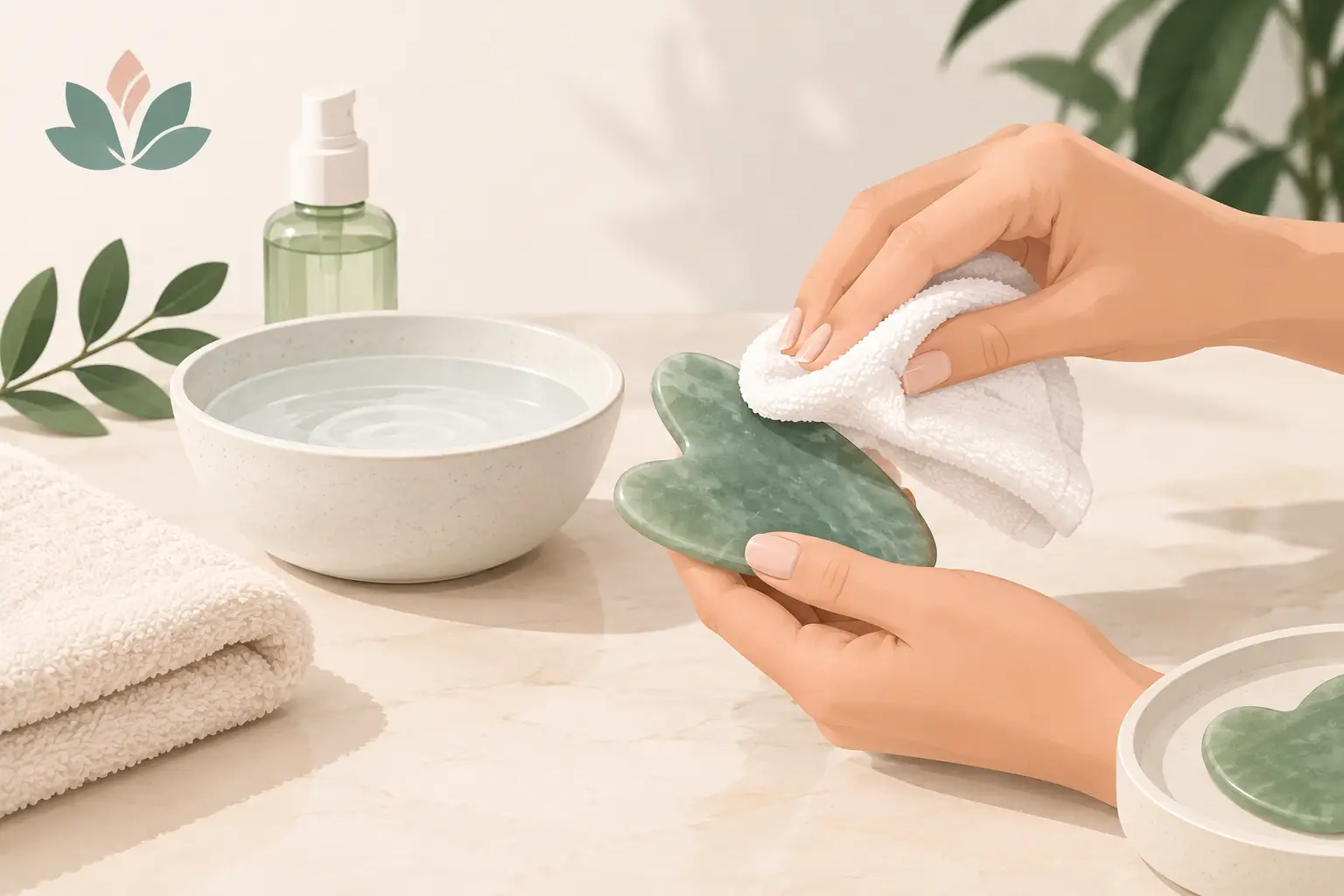
How to Clean Gua Sha for a Clearer Ritual

A gua sha tool should glide across skin, not carry yesterday’s serum, facial oil, or makeup residue into today’s ritual. Learning how to clean gua sha takes only a few minutes, yet it helps protect both your complexion and the beautiful feel of your routine. Think of it as the final, quiet step in a facial massage - a small act of care that keeps your tool ready for its next moment of glow.
Why Cleaning Your Gua Sha Matters
Your gua sha comes into close contact with skincare, skin oils, and sometimes lingering traces of makeup or sunscreen. Even if your face is freshly cleansed, product residue can collect along the curved edges and in any engraved details. Left there, it can make the tool feel less smooth, dull its finish, and create an environment where unwanted buildup may develop.
A clean tool also helps you get the most from the products you apply before facial massage. Your hydrating serum or facial oil should feel fresh and cushiony on the skin, not mixed with old residue from the night before. This is especially worthwhile if your skin is prone to breakouts, sensitivity, or congestion.
The good news is that proper care does not require harsh cleansers, special machines, or an elaborate routine. Gentle, consistent cleaning is more effective than an occasional aggressive scrub.
How to Clean Gua Sha After Each Use
The safest method depends slightly on what your tool is made from. Most traditional gua sha tools are crafted from jade or rose quartz, while others may be stainless steel, resin, or ceramic. Natural stone deserves a little extra gentleness because it can be more vulnerable to scratches, temperature shock, and damage from prolonged soaking.
Start with clean hands
Before touching your gua sha, wash your hands thoroughly. There is little benefit in cleaning a facial tool only to transfer oils or bacteria from your fingertips straight back onto it. Place a soft, clean towel on the counter so your tool has a protected surface to rest on.
Rinse with lukewarm water
Hold the gua sha under a light stream of lukewarm water. Avoid very hot water, especially for jade and rose quartz, since sudden temperature changes can stress natural stone. A quick rinse loosens facial oil, serum, and lotion without exposing the tool to more water than necessary.
Do not leave a stone gua sha soaking in the sink or a bowl. While a brief rinse is fine, extended soaking can affect the finish or any adhesive used in tools with multiple pieces.
Use a gentle cleanser
Add a small drop of mild, fragrance-free soap to your fingers or a soft cloth, then gently wash both sides of the tool. Follow its curves and edges, where product tends to linger. There is no need to scrub hard - a gua sha’s smooth surface should be treated with the same care you give to delicate skincare accessories.
Avoid abrasive scrubs, exfoliating cleansers, bleach, and heavily fragranced household soaps. They can leave a film behind or gradually wear down the surface. If you use a facial cleanser that is gentle enough for sensitive skin and rinses cleanly, it can be a suitable option for regular washing.
Rinse completely and dry right away
Rinse away every trace of cleanser, then pat the gua sha dry with a soft, lint-free towel. Pay attention to the edges, grooves, and corners. Letting water sit on the tool can leave mineral marks, particularly if you have hard water.
Once dry, leave it on a clean towel for a few minutes before storing it. This extra bit of air-drying is useful if your tool has any small seams or decorative details where moisture could hide.
Can You Use Rubbing Alcohol on a Gua Sha?
It depends on the material and the manufacturer’s care guidance. Stainless steel gua sha tools can generally tolerate a quick wipe with 70% isopropyl alcohol, followed by drying. This can be useful after illness or when you want an occasional deeper refresh.
For jade, rose quartz, and other natural stones, alcohol is not the best everyday choice. Repeated use may dry out the surface, affect the polish, or interfere with finishes and adhesives. Gentle soap and water remain the preferred method for stone tools.
Cleaning and disinfecting are not the same thing. For a personal gua sha used only on freshly cleansed skin, washing after every use is usually enough. If you have an active skin infection, open blemishes, a cold sore, or irritation, skip facial massage until the area has healed. No cleaning method can make it appropriate to massage compromised skin.
What Not to Do When Cleaning a Gua Sha
A gua sha is simple, but a few habits can shorten its life. Do not put it in the dishwasher, where high heat and harsh detergent can damage stone, weaken adhesive, or leave a cloudy finish. Do not boil it, microwave it, or expose it to extreme heat or cold in an attempt to sanitize it.
It is also wise to avoid leaving your tool on a damp shower ledge or beside the sink, where splashes, humidity, and accidental drops are more likely. Your bathroom can still be its home - just choose a dry, protected spot.
Finally, never use a chipped or cracked stone gua sha on your face. Even a small rough edge can scratch delicate skin. Retire a damaged tool rather than trying to sand, glue, or repair it yourself.
A Simple Storage Ritual That Protects Your Tool
After your gua sha is completely dry, store it in a clean pouch, lined case, or dedicated drawer. Keeping it separate from loose makeup brushes, metal tools, and countertop clutter helps prevent scratches and keeps dust away. If your gua sha came in a protective box, that can be an ideal storage option.
Many people enjoy the cooling sensation of a chilled gua sha. Refrigeration is fine for most tools, provided it is clean, dry, and kept in a protective pouch or container. Skip the freezer. Extreme cold can be uncomfortable on sensitive skin and may put natural stone at risk of cracking.
If you keep your tool in the refrigerator, clean the storage container regularly as well. A beautiful skincare ritual feels more reassuring when every part of it is cared for.
When Your Gua Sha Needs More Than a Quick Wash
A quick cleanse after each use is the foundation, but take a closer look once a week. Check the edges in bright light for dried oil, makeup stains, or a tacky feeling that suggests product buildup. If needed, wash it with mild soap and use a soft microfiber cloth to gently polish the surface dry.
If you share a home with others, keep your gua sha personal. Facial tools are not ideal to share, even between close friends or family members, because they come into direct contact with skin oils and bacteria. A personal tool makes your ritual both more hygienic and more intentional.
For skincare lovers who use richer facial oils, overnight masks, or creamy moisturizers, cleaning immediately after use matters even more. Oils can leave a stubborn film if they are allowed to sit, but they rinse away easily while fresh.
Let Your Ritual Feel Fresh Every Time
Your gua sha is more than a pretty addition to the vanity. It is a tactile pause in the day - one that can help your skincare feel more intentional, soothing, and luxurious. A gentle cleanse after every massage protects that experience, so each glide feels cool, smooth, and beautifully fresh against your skin.
Keep a soft towel nearby, wash your tool while the ritual is still top of mind, and let that final moment of care set the tone for the glow you are building.


Comments