
Gua Sha vs Jade Roller: Which Fits You?

Some mornings, your skin wants a gentle wake-up call. Other days, it needs a full reset. That is why the gua sha vs jade roller question comes up so often - both tools can elevate your routine, but they do not do the exact same job.
If you want a ritual that feels calming, supports circulation, and helps your products glide beautifully, either tool can earn a place on your vanity. But if you are deciding between the two, the better choice depends on your skin goals, your schedule, and how hands-on you want your routine to feel.
Gua sha vs jade roller: the real difference
At a glance, both are facial massage tools designed to support glow and reduce the look of puffiness. The difference is in the pressure, shape, and style of movement.
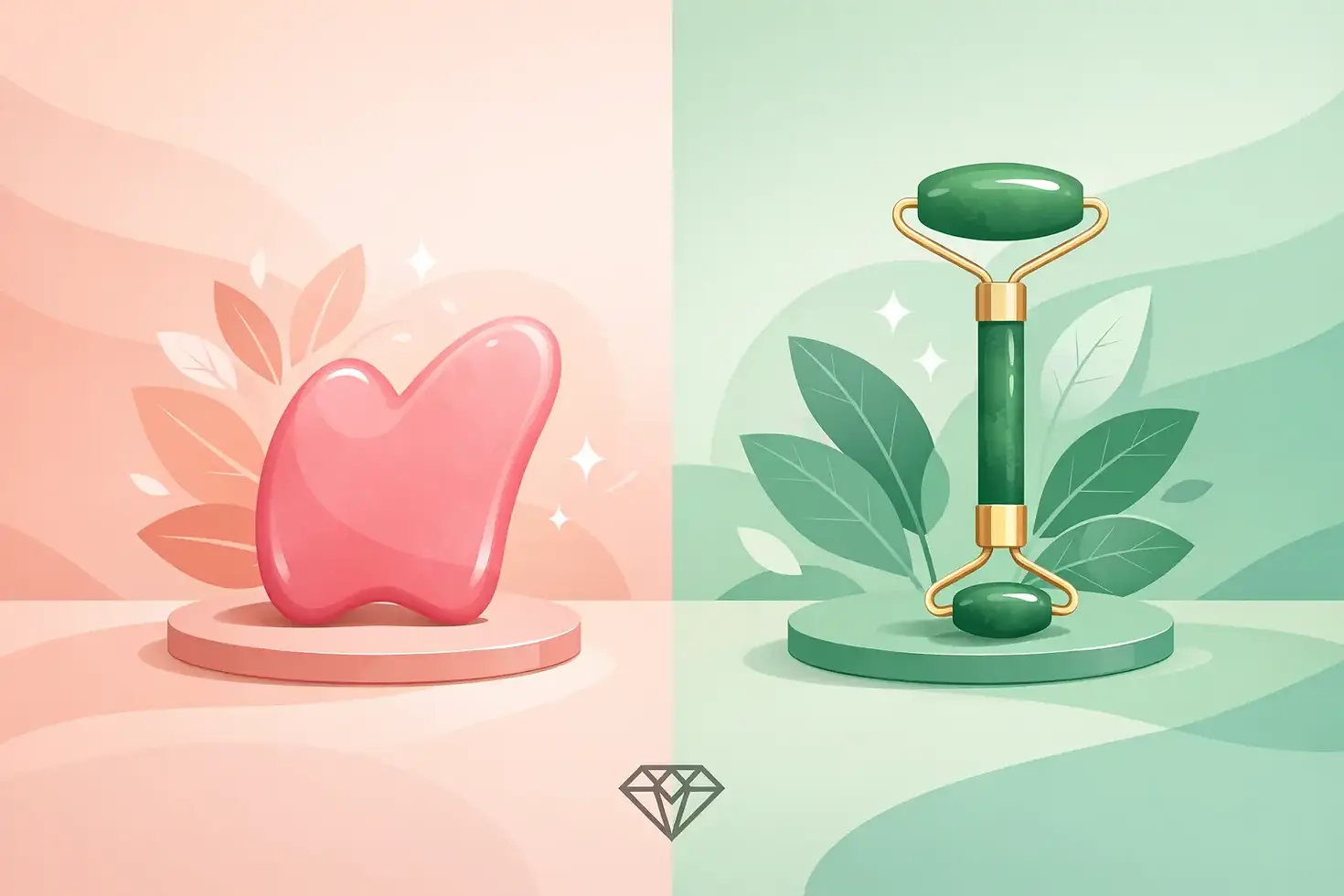
A jade roller is usually a handheld roller with one or two smooth stone barrels that glide over the skin. It is straightforward, easy to use, and ideal when you want something quick. Think of it as the effortless option for a soothing facial massage, especially in the morning.
A gua sha tool is typically a flat sculpted stone with curved edges. Instead of rolling over the skin, you sweep it with intention along the contours of the face. It asks for a little more technique, but it also gives you more control over pressure and direction. That is why many people reach for gua sha when they want a more defined, sculpting-style massage.
Neither is universally better. They simply create different experiences on the skin.
What a jade roller does best
A jade roller shines when your skin feels puffy, tired, or warm. The rolling motion is light and repetitive, which can help the face look refreshed with very little effort. If you keep it cool, it can feel especially lovely under the eyes or along the cheeks after a short night, a salty meal, or a long screen-heavy day.
It is also one of the easiest beauty tools to use consistently. There is almost no learning curve. Apply your serum or cream, then roll outward and upward with gentle pressure. For someone who loves simple rituals and visible freshness without too much technique, a jade roller is often the easiest place to start.
The trade-off is that it tends to be less targeted than gua sha. You can absolutely use it across the jawline and cheekbones, but it does not hug facial contours in the same way. The result is more refreshing and depuffing than deeply sculpting.
What gua sha does best
Gua sha feels more intentional from the first pass. Because the tool has defined edges and curves, it can follow the natural structure of the jaw, cheekbones, brow bone, and neck more closely. Used with a facial oil or a slip-rich serum, it creates a massage that feels slower, more grounded, and more transformative.
This is often the tool people gravitate toward when they want their routine to feel like both skincare and self-care. The motions encourage you to slow down. With regular use, skin can appear more awake, more toned, and more radiant, largely because massage supports circulation and helps release visible tension in the face.
That tension point matters more than many people realize. If you clench your jaw, furrow your brow, or carry stress in your face, gua sha can feel especially rewarding. A roller can soothe, but gua sha can work more precisely around the places where tightness tends to settle.
The only catch is that technique matters. Too much pressure or not enough product slip can irritate the skin rather than support it. Gua sha is not difficult, but it does ask for a gentler, more mindful approach.
Gua sha vs jade roller for puffiness, sculpting, and glow
If your main goal is depuffing, both tools can help. A jade roller is typically better for quick morning puffiness, especially around the eyes and cheeks. It is cooling, simple, and easy to use for one to three minutes before makeup or sunscreen.
If your goal is sculpting, gua sha usually has the edge. The shape of the tool allows for more deliberate strokes along the jawline, cheekbones, and neck. It creates a more contour-focused massage, which is why many people feel it gives a more lifted look over time.
For glow, either tool can be beautiful when paired with hydrating skincare. Massage supports circulation, and that fresh, healthy-skin look is often what people notice first. If your routine centers on nourishment and moisture retention, the real magic is often in the combination: a hydrating serum or cream plus a tool that helps you slow down long enough to actually enjoy the ritual.
Which tool is better for your skin type?
For dry or dehydrated skin, both can work well as long as you use enough slip. A nourishing facial oil, hydrating serum, or rich cream helps protect the skin barrier during massage. On skin that is craving comfort and radiance, either tool can make your products feel more luxurious and your routine more effective.
For sensitive skin, the jade roller is often the gentler starting point. The pressure is lighter and easier to control without much practice. Gua sha can still be suitable, but only with a very soft hand and plenty of glide.
For breakout-prone skin, it depends on the condition of your skin at the moment. A clean jade roller can be fine if used gently around inflamed areas rather than directly over them. Gua sha may feel too intense during active irritation, especially if you are tempted to press harder. In that case, less is more.
If your skin concerns lean toward dullness, facial tension, and a less-defined look, gua sha may feel more rewarding. If they lean toward morning puffiness, tired eyes, and wanting a quick boost, the roller may fit your routine better.
How to choose based on your lifestyle
This is where the decision often becomes clear.
If you want something fast, foolproof, and easy to use every day, choose the jade roller. It suits busy mornings, travel bags, and routines where you want a little luxury without adding another step that feels complicated.
If you enjoy skincare as a ritual and do not mind spending five extra minutes on yourself, choose gua sha. It rewards consistency and presence. It can turn a basic evening routine into a moment that feels more restorative.
Some people start with a roller because it feels approachable, then add gua sha once they want more sculpting and more intention. That is a lovely path too. It does not have to be either-or forever.
How to use them without irritating your skin
The golden rule for both tools is simple: never drag them across dry skin. Start with freshly cleansed skin and apply a product that gives enough slip. Hydrating serums, facial oils, and nourishing creams all work, depending on your preference.
With a jade roller, use light pressure and roll from the center of the face outward. You can move from the jaw toward the ears, from the nose across the cheeks, and gently under the eyes toward the temples. Keep the motion smooth and relaxed.
With gua sha, hold the tool nearly flat to the skin rather than upright. Use slow strokes along the neck, jawline, cheekbones, and brow area. Think guided sweep, not scraping. The name can sound intense, but facial gua sha should feel soothing, not harsh.
Clean your tools regularly, especially if you use them with rich skincare or on acne-prone skin. Consistency matters, but clean technique matters too.
Do you need both?
Not necessarily, but they can complement each other beautifully. A jade roller is excellent for everyday ease and quick depuffing. Gua sha is ideal when you want a more sculpting, tension-releasing massage. If you love building a ritual wardrobe for your skin, there is room for both.
That said, one well-used tool is better than two forgotten ones. If you are building your routine thoughtfully, choose the one you are most likely to use consistently. Results in facial massage usually come from repetition, not from owning the most tools.
For many skincare lovers, the best answer to gua sha vs jade roller is not about trends. It is about how you want to feel when you care for your skin. Quick and refreshed? Reach for the roller. Slow, sculpted, and deeply restored? Gua sha may be your match.
Healthy-looking skin is rarely about doing more for the sake of it. It is about choosing rituals that support your face, your schedule, and your sense of ease. Start there, and your tool will feel less like a beauty extra and more like a natural part of your glow.


Comments